How To Plan A Garden Decking Project
Garden Inspiration For Today, Tomorrow and Forever
Getting Started: Garden Decking Ideas
Whether you’re planning to upgrade an existing space or create a garden decking area from scratch, there are a lot of different components to consider. Everything from the material that you choose to the accessories that you source will impact your space, and the space itself will also have an impact on your choices.
Our handy guide to garden decking ideas covers what you’ll need to consider before starting. Hopefully it will also inspire you to create a space that you’ll want to spend time in for years to come!
Choosing Your Decking Materials
Wooden Decking Boards
- Traditional look
- Relatively affordable
- Great for large and small gardens
- Some preparation for installation
- Needs regular maintenance
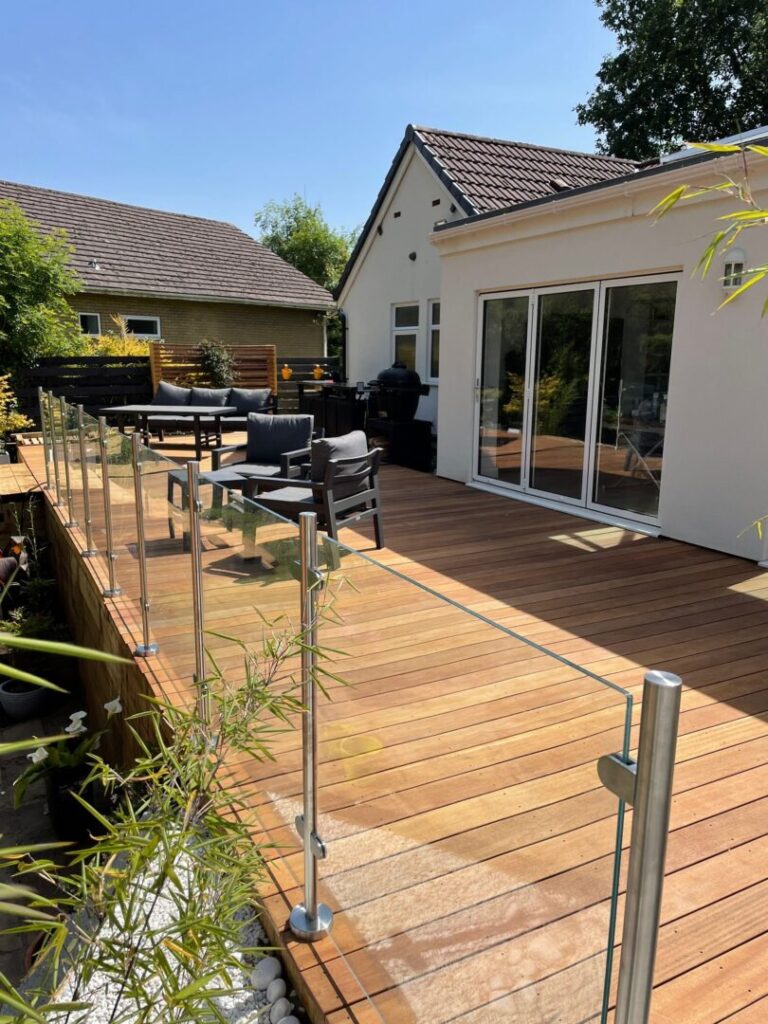
Traditional wooden decking provides a natural look with clean lines, and you can choose from various tones and textures. Many people are attracted to wooden decking by its warm, cosy and timeless feel. You don’t need to worry about changing trends and can pick a type of wood to suit your tastes and budget.
Softwoods are generally lighter in both weight and colour and are more affordable than darker, heavier hardwoods. Strong hardwoods have greater decay resistance and natural durability. However pressure-treated softwood decking is designed to resist decay, insects and rot. Nowadays, it can be just as good as premium hardwoods.
You’ll need to prepare the area where your decking will go, including building a decking frame. This gives your decking boards a strong and stable structure that also allows water to drain. It is essential to prevent rot, mould and warping.
All wooden decking boards need regular maintenance to keep them in decent condition. Untreated softwoods are particularly vulnerable to the elements, but these can spoil hardwoods too. You will need to stain or seal the wood every few years to protect against moisture and UV damage.
Composite Decking Boards
- Similar look to real wood
- Higher upfront cost
- Minimal maintenance and long lifespan
- Easy to install
- Wide choice of styles
Composite decking has gained popularity because of its durability and versatility. It is made from a mixture of wood fibers and recycled plastic. This gives boards a similar appearance to traditional wood but with better resistance to UV rays, insects, warping and rot.
While it is more expensive than some traditional decking, composite decking boards are easier to install and maintain, and last longer. They don’t need staining or sealing – simply an occasional clean with soapy water.
Plastic Vinyl Decking
- Lots of colour choices
- Scratch, insect and moisture resistant
- Low maintenance and long lifespan
- Can be less environmentally friendly
- Often the most expensive option
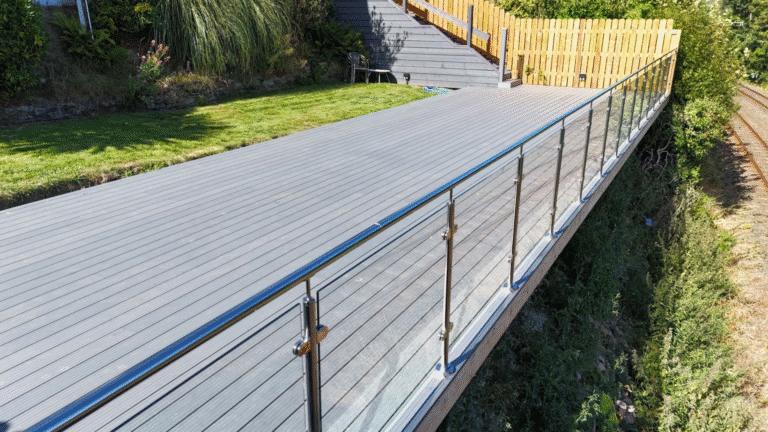
Plastic vinyl decking boards are designed to give you different design options while keeping maintenance to a minimum. It can be more expensive than other materials but plastic vinyl allows you to choose from a wider range of colours and finishes.
PVC decking is scratch, insect and moisture resistant, meaning that it can last longer than the alternatives. It is also easier to clean and doesn’t require the same treatments as wooden decking.
Using PVC can have more of an environmental impact as they’re fully plastic, but this decking can also be recycled at the end of its life. It’s also worth considering that when plastics of any kind are exposed to the elements there can be some discolouration or warping that may not occur with natural decking materials.
Decking Tiles
- Ideal for small garden areas or balconies
- Quick and easy to install and swap around
- Can be installed over an existing surface
Perfect for a smaller space or budget, decking tiles are made from a variety of materials that join to create a decking surface. The interlocking tiles are quick and easy to install. This makes them a good option for smaller gardens or on a balcony, or over the top of an existing surface.
With options for wooden, composite or PVC tiles, you can personalise your space with a variety of natural or colourful finishes. Each material has its own maintenance requirements but all decking tiles should be swept regularly to ensure good drainage. Furniture should also be rotated around the space to prevent any uneven wear and tear.
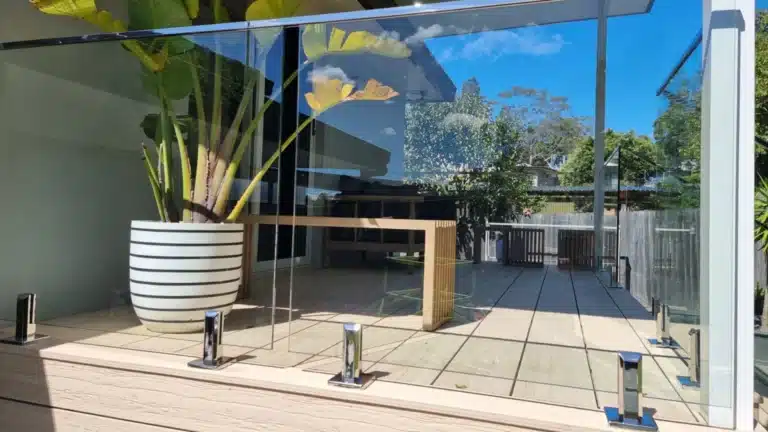
Alternative Decking Materials
There are plenty of alternative garden decking materials that you can use, depending on your needs. Harder wearing materials like tile or concrete can be useful for high traffic areas or if you’re considering a hot tub or firepit. Natural materials, such as bark chips, offer environmentally friendly or budget options. Two options that are becoming more popular are pallets and aluminium.
Pallets:
- Cheap – sometimes free!
- Sustainable recycling option
- Usually needs treating to be durable
Pallets can be a cheap (or sometimes free) source of natural material. They do usually need treatment to ensure they last through any inclement weather, but pallets are a sustainable choice for any garden decking space.
Aluminium:
- Lightweight
- Rust resistant
- Easy to maintain
Aluminium decking can be a higher initial investment, but it is lightweight and easy to maintain over a long period. As a result, the cost-per-year can actually be lower than other materials.
Aluminium is also a great choice for the environment as it is infinitely recyclable. The hard-wearing nature of aluminum also means it is less likely to warp or discolour during hot or cold weather.
Key Decking Accessories
Balustrades
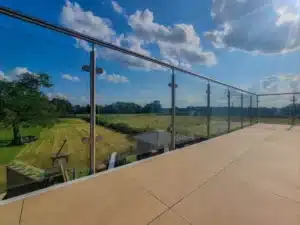
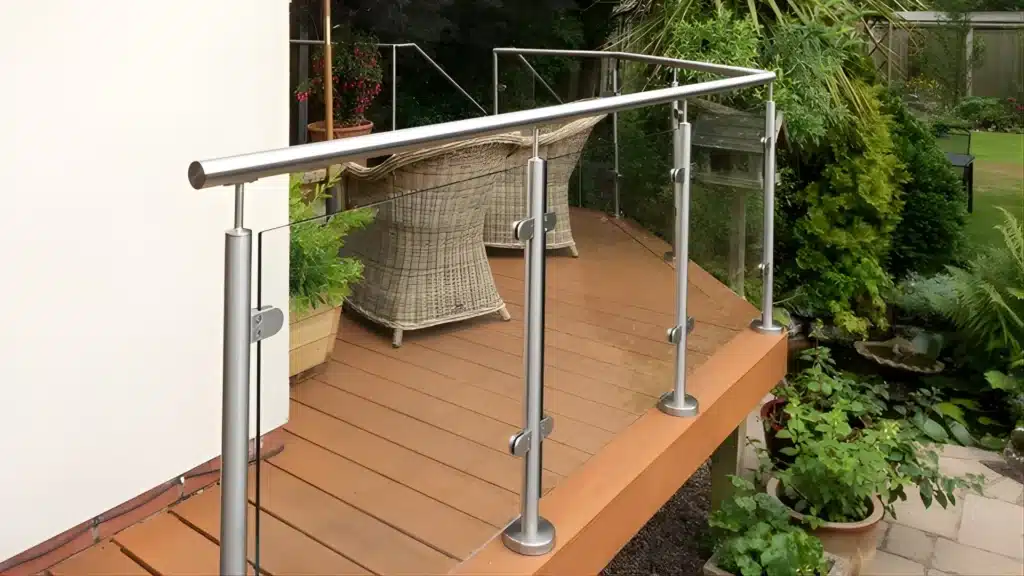
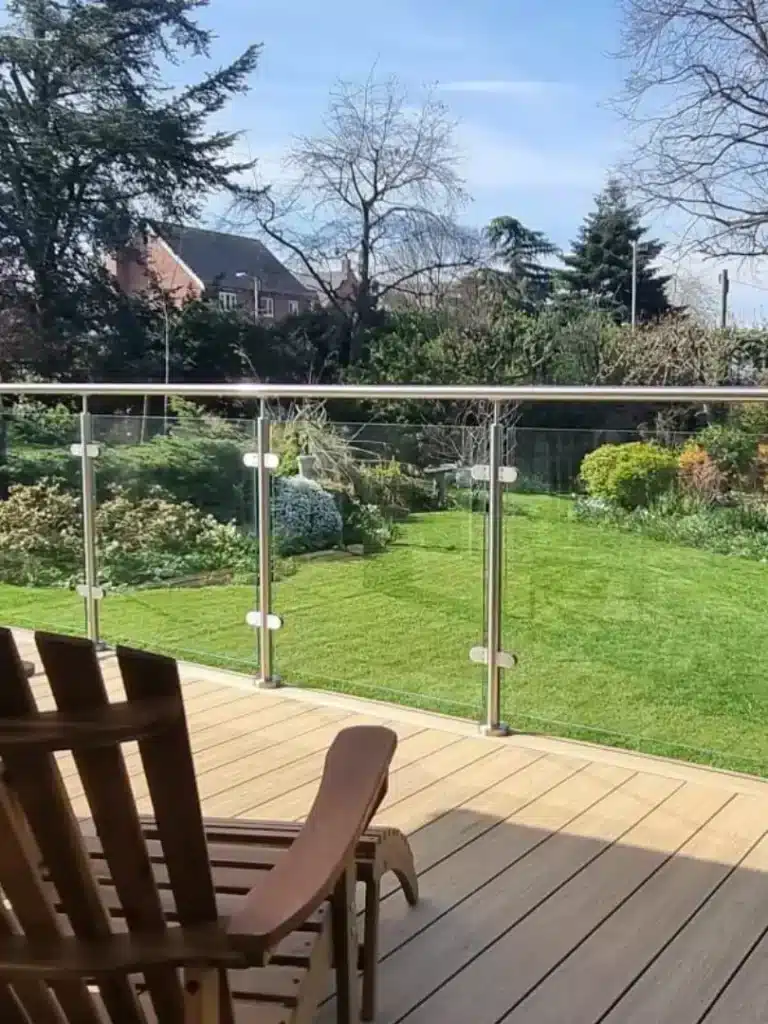
Balustrades are a customisable option for anyone looking to upgrade their garden decking. Not only do balustrades come in a variety of different materials such as metal or glass, they can also be used for safety with raised decking, privacy with frosted or tinted glass options, or as a wind break in exposed spaces.
With such a wide variety of options to choose from, balustrades can help to make your garden decking more accessible for you and your family.
Steps
Adding steps into your decking can be essential if your garden decking isn’t level or isn’t accessible from other areas. Adding stairs in the same material as your decking surface can extend your decking and connect two different garden zones.
You can also use other materials like stone or brick to create a feature (just remember to consider whether the surface could get slippery during bad weather).
Decking Edging
Decking edging and trims are used to finish the edge of the decking itself neatly, but also to create a boundary between one area of your garden and the next. Your chosen decking material should come with trim options to finish the raw edges of your decking.
There are also plenty of functional or decorative options that you can add such as handrails, decorative fencing, plant beds, seating, or gravel.
Garden Decking Lighting
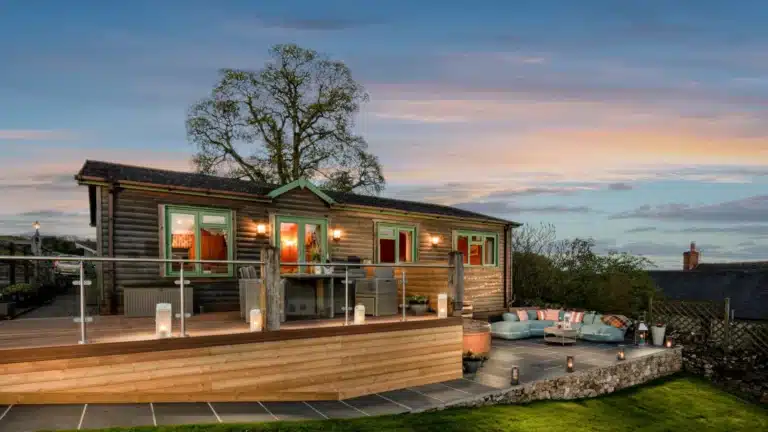
Adding lighting to your decking is a great way to be able to enjoy it day or night. If you’re at the design stage of your garden decking, you could consider including recessed lighting at ground level to edge the decking or highlight walkways.
You may also want to consider adding some freestanding lamps with brighter settings to use at night. Alternatively, if you’re just looking for ambient lighting, decorative lights or string lights can add warm glow to any area.
Solar or battery powered lighting options are low cost and low maintenance. Mains powered lighting can be more expensive, but can also offer more custom options. No matter what design you’re working with there are plenty of options to choose from.
IP Ratings
To make sure that the lighting you choose is safe for use in outdoor settings, look for IP ratings of IP44 for sheltered outdoor areas or IP66 for exposed spaces that are very likely to be rained on.
IP ratings are used to tell the consumer where electrical light fittings can be used safely. These ratings can range from IP20 for indoor light fittings through to IP66 and higher for use in hospitals. Make sure that you check the IP rating of your lighting if it’s going to be exposed to the weather.
Seating
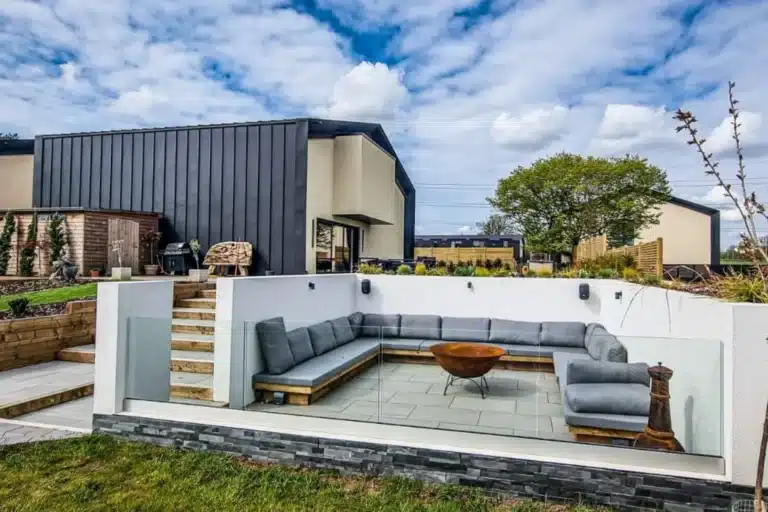
Adding seating to your garden decking is a great way to enjoy the space in a variety of different ways. To choose your seating it can be helpful to have an idea on how you want to use your decking. If you’re planning on hosting outdoor dinner parties, you’ll need a different set up to someone who is planning on drinking their morning coffee alone.
Think about the size of your decking space. Remember that you and your guests need space to move around or across the decking, so don’t purchase furniture without measuring first.
Do you have the space to store cushions or furniture when not in use? The winter weather can damage soft furnishings and organic materials such as wood or wicker. Stainless steel or aluminium seating may last longer when exposed to the elements.
Privacy
Do you want to make sure that your neighbours aren’t overlooking your space, or just create a separate zone in your garden? No matter what your ideal garden decking looks like, privacy is an important aspect of this space.
Natural Shielding
Adding in different levels of plants and foliage can increase the coverage of your decking. There are plenty of natural options to choose from including grasses, bamboos, small trees, or hedges. You can also decide between evergreen or deciduous plants for year-round privacy versus summer shade.
Pergolas
A pergola can add height and cover to your decking space which can block the view from higher windows. Creeping plants such as wisteria or jasmine can offer shade and cover during the summer months as well as a pop of colour and delicious scent during flowering seasons.
Keep in mind that while most pergolas do not usually require planning permission, there can be some restrictions. Make sure to check with your local council planning department before buying or installing a pergola on your decking.
Glass Balustrades
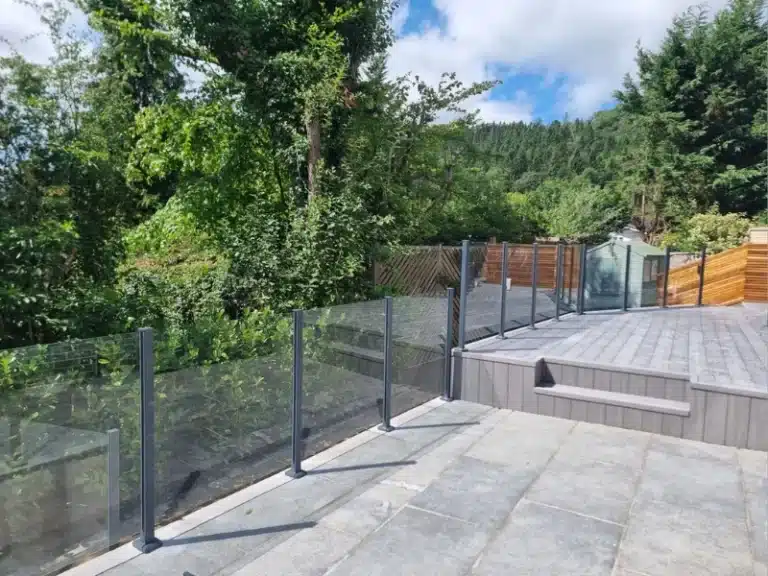
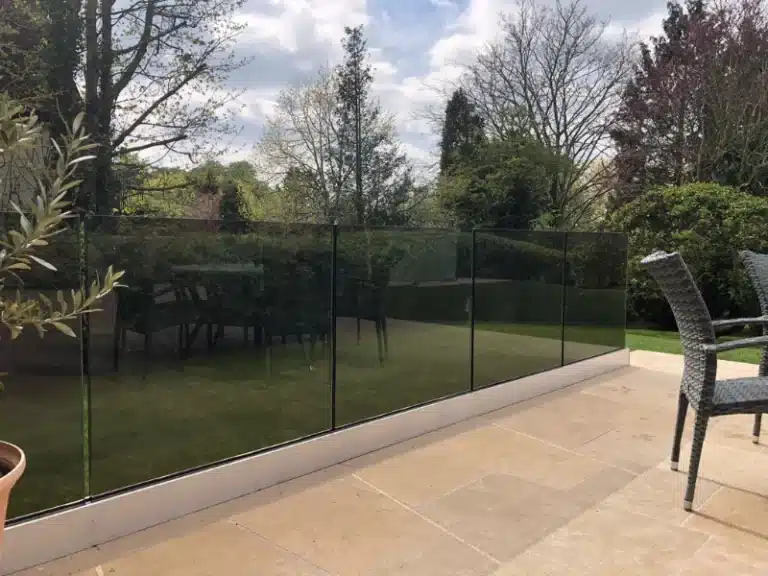
Using glass balustrades on your garden decking can also add another layer of privacy. Frosted or tinted glass can separate this space from the rest of your garden and give you some cover from prying eyes. An added bonus of glass balustrades is also wind protection and adding a safety component in raised areas.
Vertical Screening
Adding trellis panels or slatted wooden fencing to the boundary of your decking can block any direct line of sight. These options can also allow you to add more greenery in the form of crawling plants, or you can create a vertical garden with potted plants.
Ideas to Make the Most of Your Garden Decking
While somewhat limited by exposure to the elements, there are still so many different additions that can be included in your garden decking space to make it a fun and interactive area to enjoy all year.

Hot tubs can be a perfect addition for those looking for year-round relaxation and stress relief. While hot tubs should be based on concrete pavers or slabs, adding a decking around a hot tub can create a focal point in any garden space and allow you to entertain and soak at the same time!
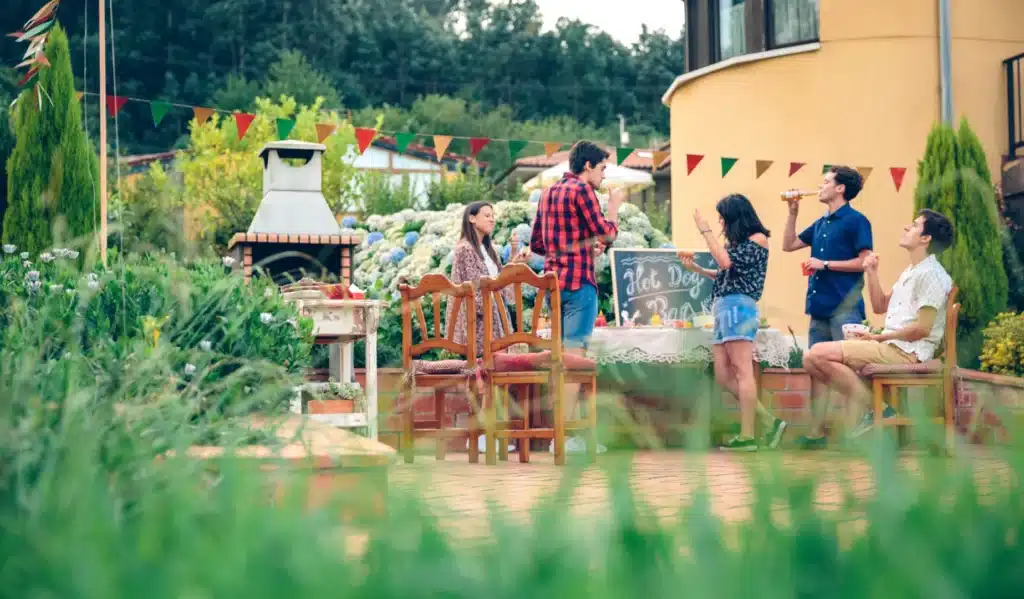
Using your garden decking to create an outdoor kitchen area would allow you to host dinner parties right in your garden. Adding an outdoor oven or BBQ along with counter space and (if you’re feeling extra) even running electrics to your decking can give you a whole new hosting space.
And if the evening is running a little late, this area could also transform into an outdoor bar!
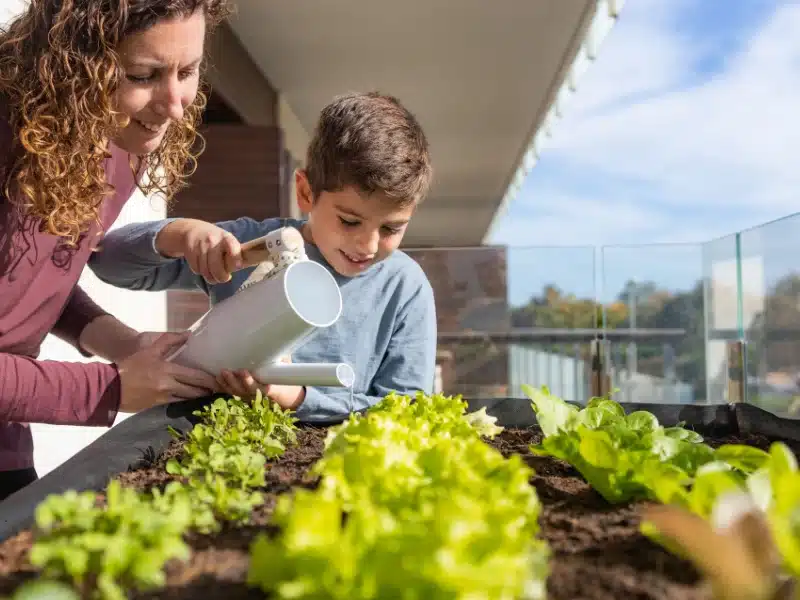
If your decking area is close to your home, you could consider creating a kitchen garden area with raised beds. A herb garden can be filled with plants that will keep your cooking flavourful year-round. Fruits and vegetables like strawberries, leafy greens, carrots, or cherry tomatoes can be added straight to your plate.

Adding a heating element to your decking can help you enjoy the space in colder weather. Wall mounted or free standing patio heaters will keep your guests warm, while a chiminea or firepit would give you somewhere to toast marshmallows.
Just make sure to place your chiminea or fire pit on a concrete slab rather than directly onto wood!
With so many options to choose from, it can be overwhelming when you’re starting to put together ideas for your garden decking area. If you don’t know where to get started, just remember to break down your project into the main areas. Decide what material you want to use, what you want to use the space for, and how you want it to look.
There are plenty of options for every budget and size, so take the time to make these key decisions before you get started. You can then create a stunning and inviting space for yourself, your family, and your friends.