Garden Pond Safety: Understand the Risks & How To Keep Your Family Safe
Glass Balustrades For Today, Tomorrow and Forever
What is Pond Safety and Why Does it Matter?
Making sure that any pond under your care is safe for people nearby should be one of your main priorities. Pond safety is a responsibility shared between the landowner and whoever is near the pond. This is especially important for families with children, with accidents (including drowning) being one of the main causes of death for under-fives.
We discuss some of the main factors to consider when thinking about pond safety. We cover how to spot any risks in and around your pond, as well as key features and accessories to make your pond safer.
What type of pond are you working with?
Ponds are an excellent addition to any outdoor space. They are teeming with life and are vital for biodiversity in your local area. Two-thirds of Britain’s freshwater plants and animals can be found in ponds. The UK needs to make sure that existing ponds are well-maintained (and create new ponds) because half a million ponds have been lost over the last 100 years. There are different regulations and expectations depending on whether your pond is part of a residential garden, a community space, or set in a commercial site.
Like every outdoor space is different, so is every pond. What type of safety features and accessories you choose for your pond will depend on the type of pond, where it is, and who will be near it. Size doesn’t matter when it comes to bodies of water because small ponds can be just as dangerous as a lake.
Safeguarding garden ponds
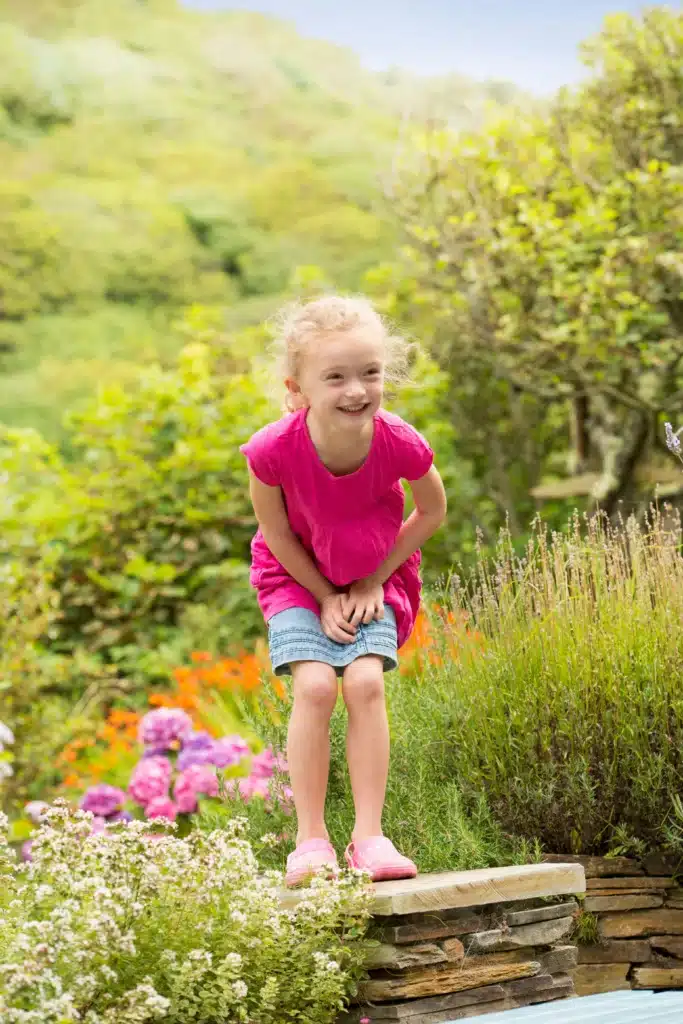
There are no specific laws about residential garden pond safety. However, all homeowners are responsible for making any feature of their property safe. They can be liable for any accidents that happen on their property. It’s in your best interests to make sure your garden pond is safe for you, your family, and any visitors!
Community ponds
Wildlife ponds in community greenspaces may not fall under the same ‘permitted development’ rules as residential ponds. Local councils will have information on whether you need planning permission for a community pond. You will also need the landowner’s permission, and may need to submit a management plan for future pond upkeep.
Commercial pond safety
For ponds and bodies of water in a commercial space there are more rigorous safety measures that must be taken. These can include risk assessments and planning permission. For more information on commercial pond safety, you should refer to local councils and surveyors for professional advice.
New vs existing ponds
Adding a new pond gives you an opportunity to include safety precautions at the design stage. This may not be possible when working with an existing one. Pond safety actions can include positioning your pond so that it is visible from any surrounding buildings, or building in features like decking from the beginning of the project. Creating a new pond can also give you more opportunity to landscape the space around it for optimal safety.
Existing ponds can include safety features, but they may need updating or adding to in order to suit your specific needs. With an existing pond you can clearly see how the pond fits into your garden space and how it can be made safer.
Wildlife pond vs fish pond safety
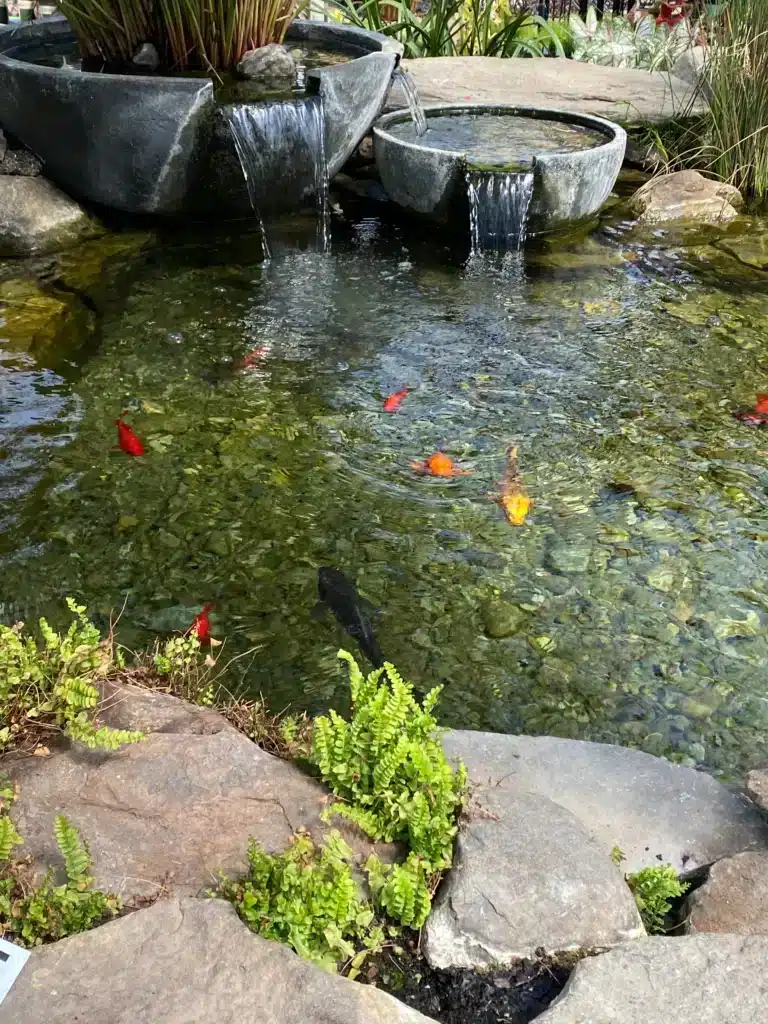
What you choose to use your pond for will influence how you keep it safe. Wildlife ponds tend to be shallower and have sloping edges so that wildlife can come and go. Fish ponds are usually deeper with steep edges.
These different features will require different safety precautions. For example, the deeper water and steep edges of a fish pond could make it hard for small children or pets to climb out after falling in. Rocks around the edge of a wildlife pond could become slippery or loose, making them a trip hazard.
Existing ponds can include safety features, but they may need updating or adding to in order to suit your specific needs. With an existing pond you can clearly see how the pond fits into your garden space and how it can be made safer.
What are the risks around your pond?
Each pond will have its own unique features that can influence safety. It’s important to consider all aspects of your pond, the surroundings, and who will be using the space when thinking about safety.
How to do a risk review
Formal risk assessments are rarely necessary for residential garden ponds. However, the principles of risk review can be used in any situation.
- Walk around your pond looking for any risks or hazards.
- Consider if any vulnerable people, children, or pets will have access to this space.
- Check if any safety features that are already implemented are still suitable.
You should also consider the space in different situations. What may be a safe path during the summer may be slippery in wet or frosty conditions. The water may be visible during the day but not as clear in dimly lit conditions.
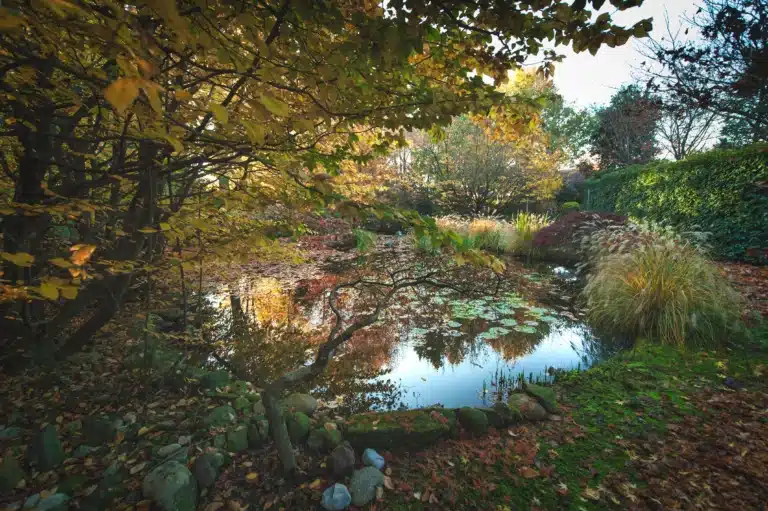
Structure
The structure of the pond itself can give you some clues as to what the risks may be. Fish ponds usually have steep sides and deeper water, but any pond could have hidden drop-offs or an unstable structure.
- Deep water
- Hidden drop-offs
- Raised vs ground level issues
- Raised ponds can be harder for children to climb out of
- Ground level ponds can be easier to step into accidentally
- Submerged dangers
- Sharp materials
- Electrical pumps
- Lighting
- Health hazards
- Stagnant water
- Chemicals
- Natural irritants (plants or insects)
- Leaks or damaged materials
Edging
The edges of a pond can often be where the most risks are. This is the last boundary between a safe area and one that shouldn’t be accessible. Looking for risks and hazards in this area can greatly reduce the chance of an accident.
- Unstable rocks or paving
- Slippery surfaces
- Uneven edges
- Lack of plant boundaries
- Trip hazards
- Insufficient safety features (such as rotten decking or flimsy fencing)
Surroundings
Take the time to think about what activities could be happening at the edge of your pond and how that could create a risk. Will children be playing nearby? Will you be mowing the lawn next to the pond? Is your pond next to a walkway or path? Think about the pond as part of the entire garden rather than simply a feature on its own and consider:
- Paths and walkways beside the pond
- Low hanging branches that children could climb
- Visibility
- Is the pond visible from your house?
- Is the water visible or covered by plantlife?
- Steep banks someone could fall down
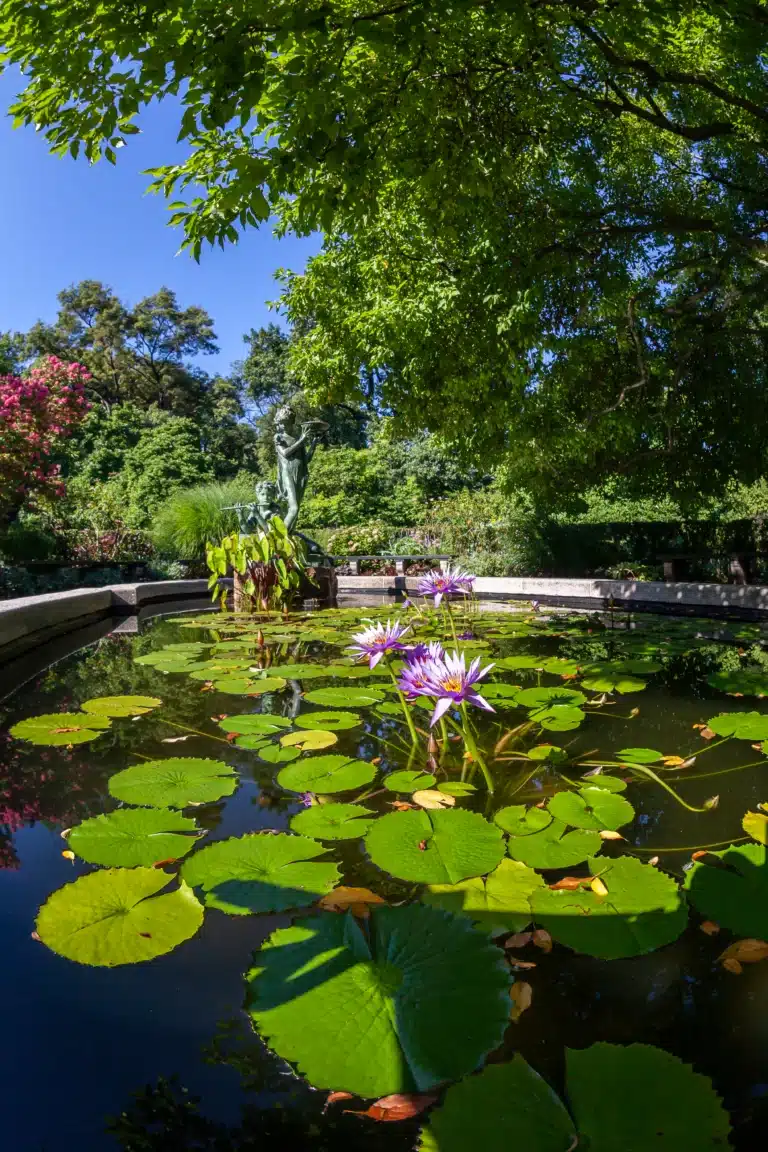
Pond safety features
Taking the time to think about the risks posed can help you decide what type of safety features work best for your situation. Combining different safety features and accessories can make sure that you have a safe space.
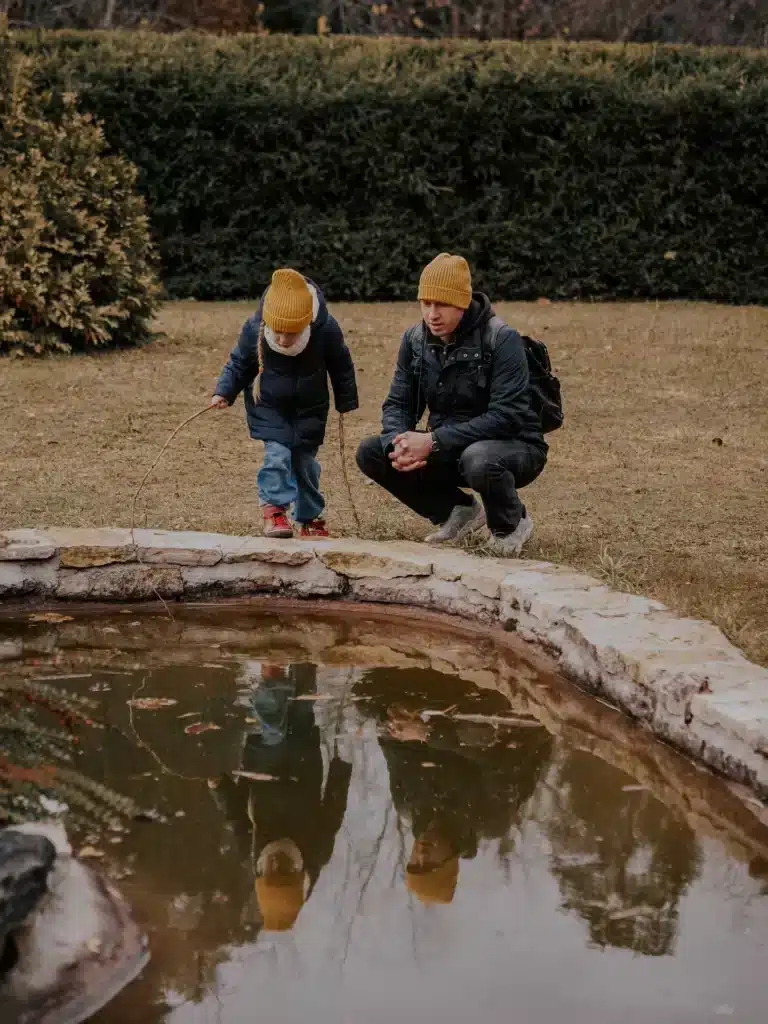
Positioning
If you’re building a new pond then you should take into consideration the position of your pond. Having a clear view from your home to the pond helps you spot accidents or issues near the pond. You can also position the pond so that deeper sections of water are furthest from paths or walkways.
For existing ponds, think about the position of any additions you include. If you’re adding decking, then you could position it by a shallow bank so that there are no steep drops into the water.
Edging
Having suitable edging for your pond will make the boundary between dry land and water more defined. This will help to stop many accidents that could happen at the edge of a pond. Make sure that any rocks or paving are stable and secure. Treat any organic materials such as wood or bamboo so that they don’t deteriorate in the water.
You also want to make sure that no matter what type of pond you have, any children, pets, or wildlife that fall in can get out without assistance. Adding in edging such as taller plants or larger secured rocks can give small hands something to grab onto. Include a gentle sloping edge for an easier way of exiting the water.
For existing ponds, think about the position of any additions you include. If you’re adding decking, then you could position it by a shallow bank so that there are no steep drops into the water.
Fences
Fencing a pond for safety provides an excellent physical boundary. Short fences can be effective at stopping people from wandering into a ground level pond. Natural fences made from bamboo, potted tall plants, or recycled wooden posts will give a clear boundary but allow wildlife to reach the water. If you have younger children then traditional fencing and a lockable gate allow them to wander the rest of the garden without worry.
Decking
Adding decking to the edge of a pond gives you a safe space to enjoy the water on a stable and supported platform. Decking can be a good option if you’re planning to incorporate the pond into your garden routine. Children can view the pond safely from a decking where adults can easily supervise. Decking can also be combined with other safety features such as fences or balustrades to make the area even more safe.
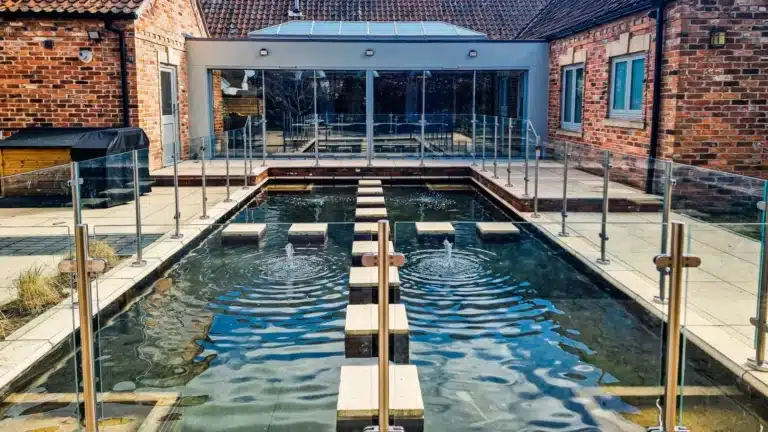
Balustrades
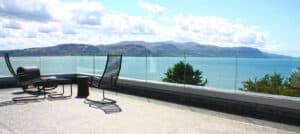
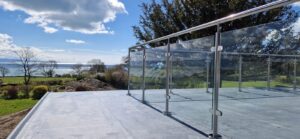
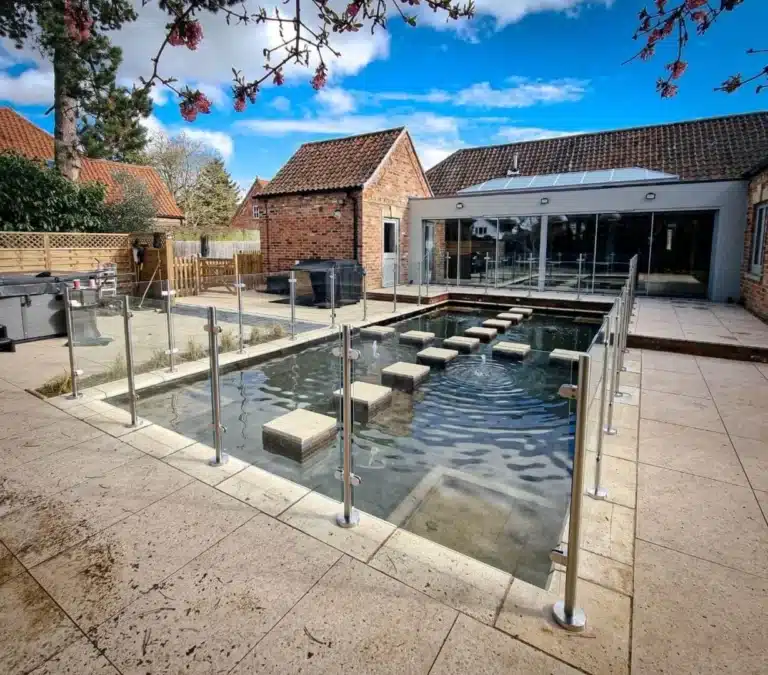
Balustrades are an alternative to traditional pond fencing and offer an aesthetic barrier around your pond. Materials like steel and glass ensure that children and pets can’t reach the water while still being able to see the pond.
Glass balustrades for ponds can be customised with different colours and finishes so you can create a safe boundary that fits with your overall style. Marine grade stainless steel and other hardwearing materials mean your pond safety barrier will be extremely durable and long lasting.
Nature
Using different types of plants around your pond can be more than an aesthetic choice. Tall plants can act as a natural fence boundary around a pond. Plants in shallow edges of the pond can offer cover for wildlife and also give children something to grab onto if they fall into the water. Dense plant life can stop people from getting close to the water at all.
There are plenty of options for plants that thrive in ponds, so you can mix and match to create an ecosystem that’s good for the environment as well as safe.
Pond safety covers
Pond covers come in various different designs and are used for more than just safety. The type of pond safety cover you want depends on whether there will be children around the pond and how old they are. You should also consider what type of pond you have, and whether you want any additional protections such as from debris or predators.
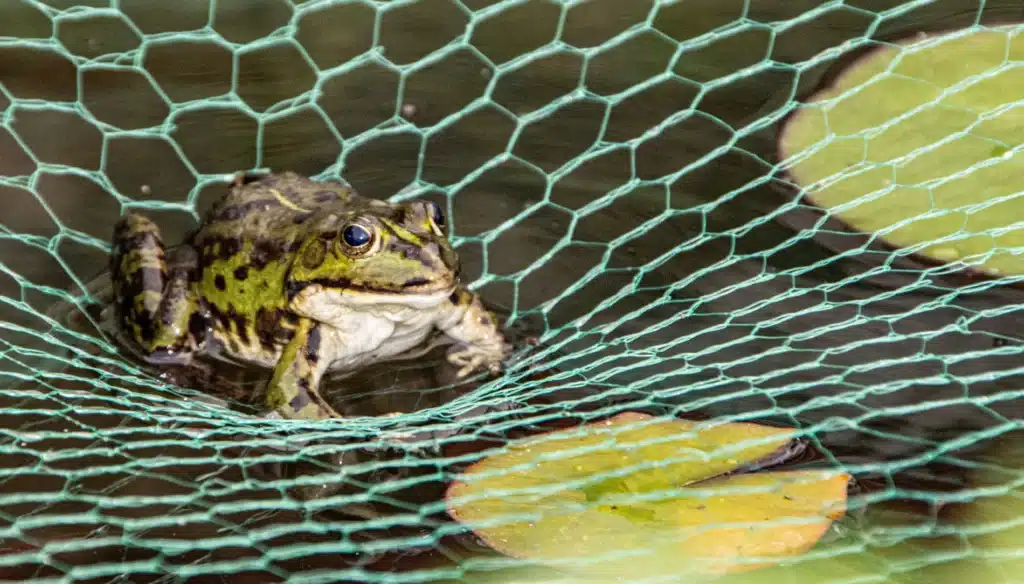
Netting can be an effective cover against larger debris such as leaves falling into the water during the autumn. Unstable rock piles around the edges of ponds can also be made more secure by using pond safety netting.
However, netting may not be sturdy enough to stop heavier things like pets or children from falling into the water. There are options for specialised high strength nets for safety purposes, but they can be significantly more expensive.
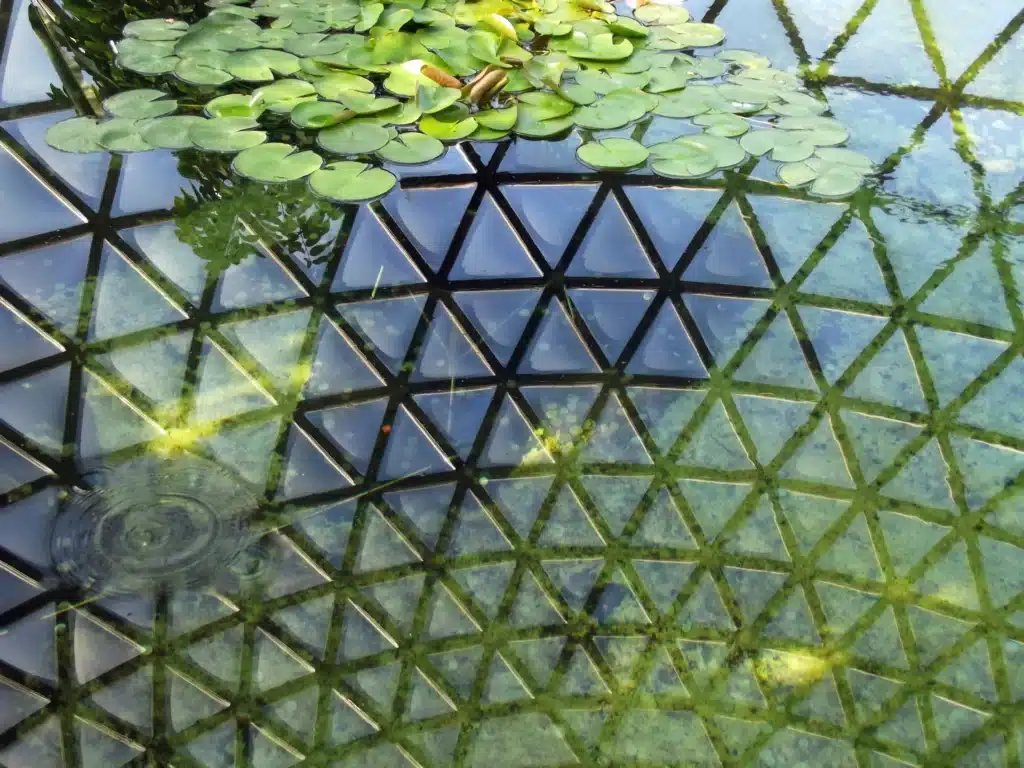
Dome covers are a rigid steel structure that sit on a frame over the pond. They offer more protection from debris, predators, or even from snowfall. They are generally customisable to allow for specific aesthetics or grid sizes that can still allow wildlife to reach the water. However, a solid steel grid may not offer the softest of landings if a small child were to fall into the pond.
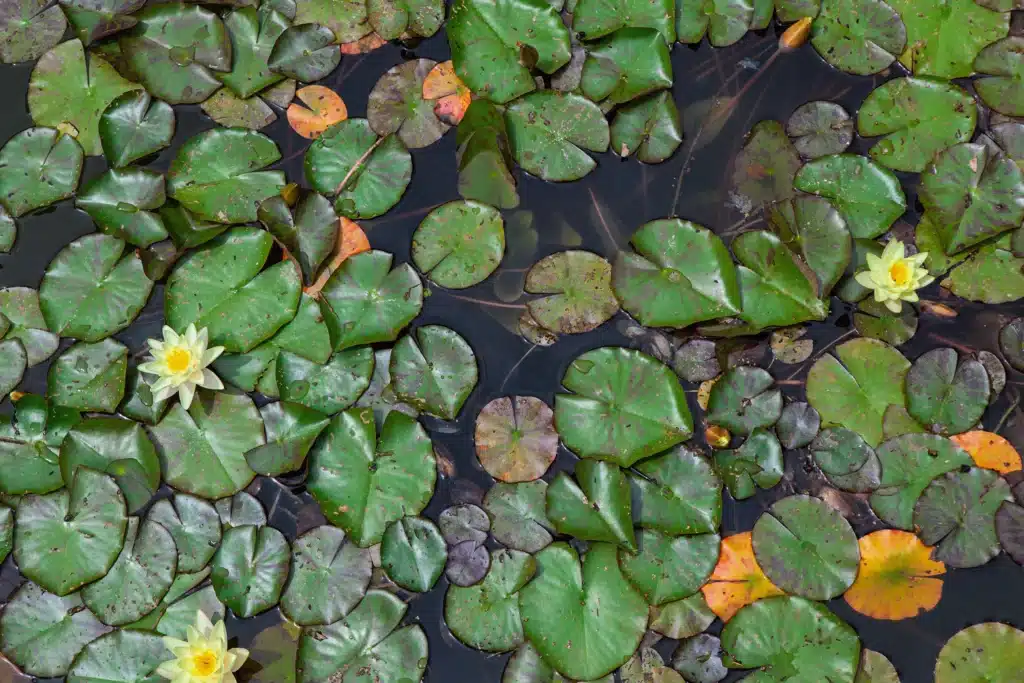
Floating covers are generally used during the winter as a barrier against debris and heat loss. These covers sit directly on the surface of the water but do not offer a significant safety barrier for any children or animals that would fall in the pond.
Marine grade steel is often used to create a rigid mesh that can be installed just above or below the water line of your pond. These grids offer a sturdy, permanent barrier that can be aesthetically unintrusive.
You can also choose between different mesh sizes depending on your needs. Smaller mesh can be effective against predators such as herons or foxes. Larger mesh allows wildlife like frogs to take up residence in your pond.
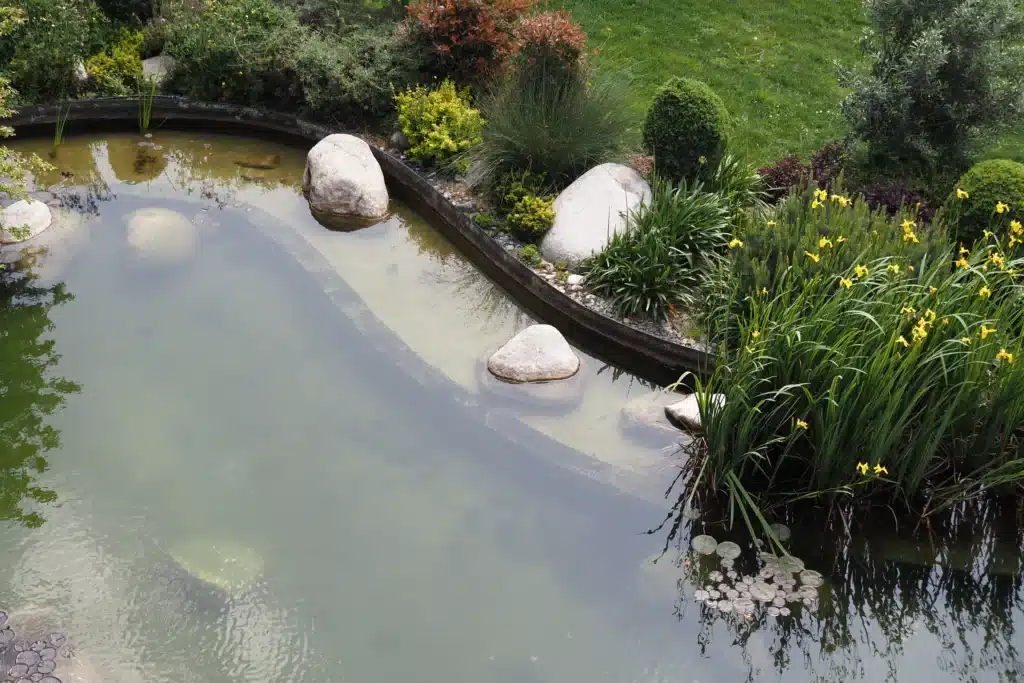
There are also options for pond safety covers that are made specifically to support the weight of a child. These are usually bespoke or customisable systems and can include safety grids, high strength woven nets, or galvanised mesh. The materials in these specific safety covers are typically high-grade and durable, so will be suitable for long-term safety.
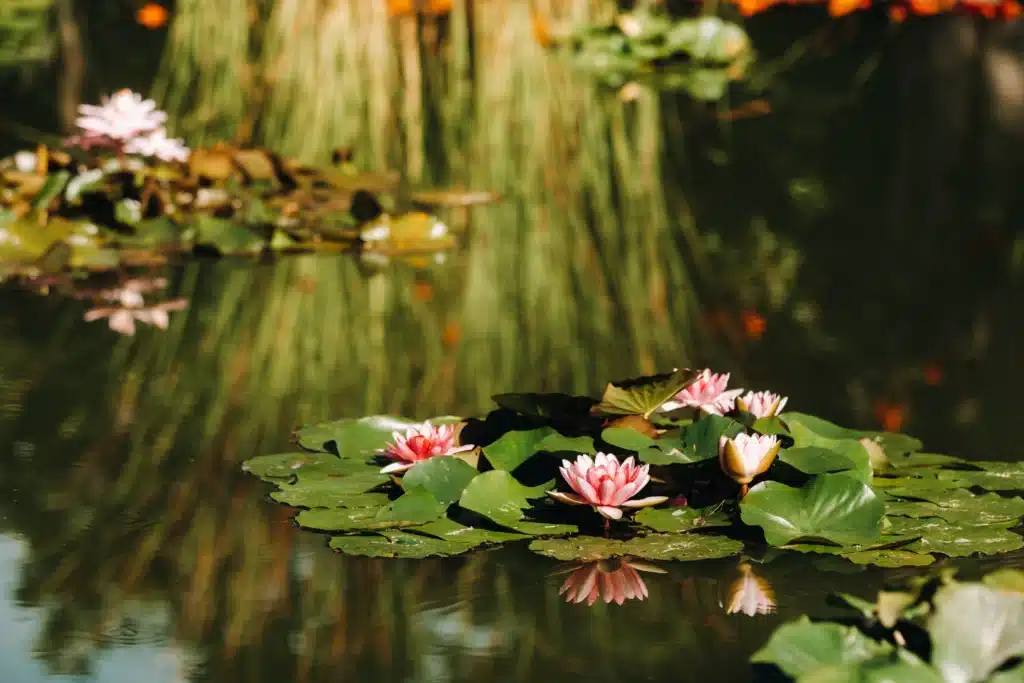
Maintenance
Keeping your pond well maintained can help you to spot any potential risks before they become a problem. This can include general maintenance of the edges of the pond, keeping plants cut back for good visibility of the water, and updating any pond safety features regularly.
Staying on top of your pond maintenance will help keep it in a safe condition for any children, pets or other visitors to the garden.
Pond safety accessories
While structural changes and additional pond safety features make a big difference, you can also add accessories. If you have a smaller budget or want some ‘cherry on top’ safety considerations, then consider some of the following accessories for further peace of mind.
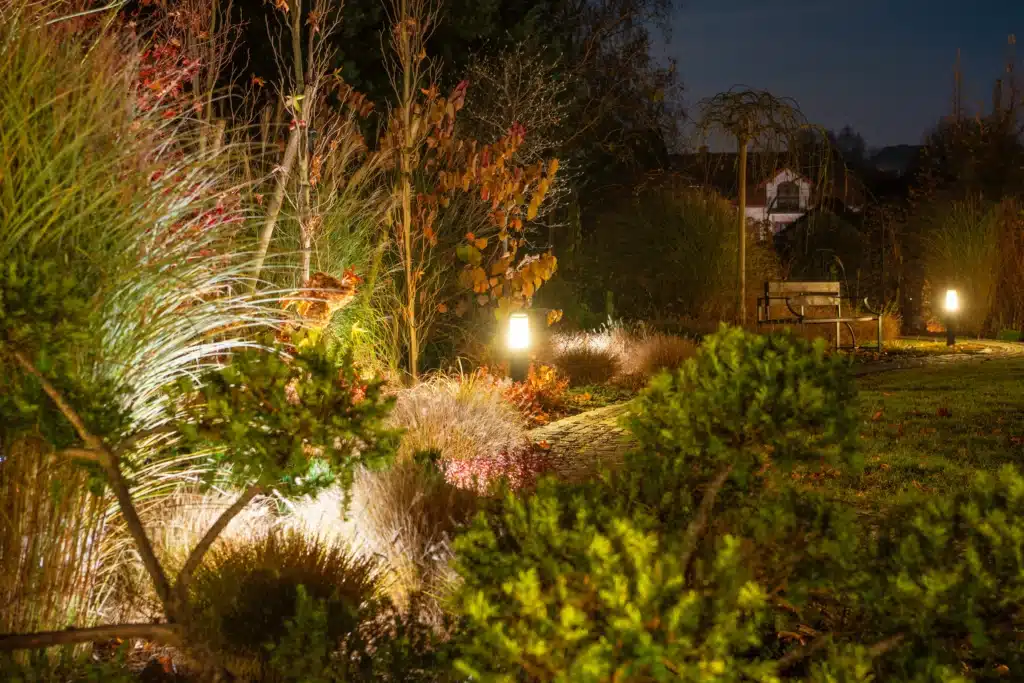
Including lighting in and around your pond can be more than an aesthetic choice. Lighting can illuminate the pond when there’s low light. By ensuring surrounding areas, including paths, are illuminated, you’re less likely to have an accident in the dark. Make sure that any pond lighting that is exposed to water or submerged is rated waterproof and safe for outdoor use.
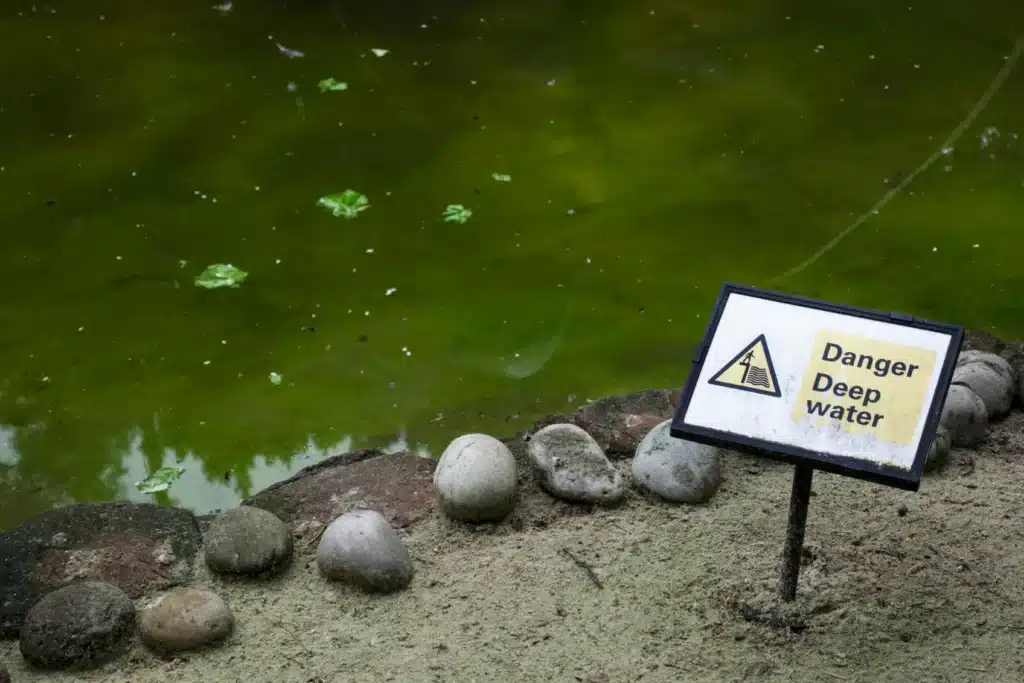
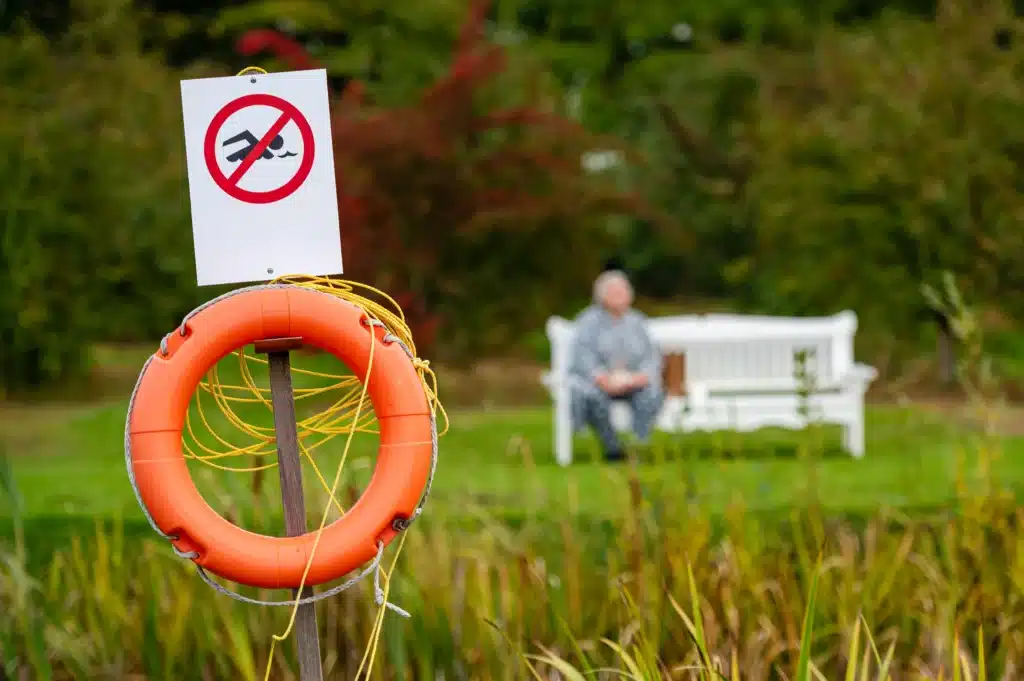
Having signs around your pond can be especially helpful for community and commercial spaces. If you have a pond with deep water or hidden electrical cables, then you should consider adding signs to let your visitors know.
Signs can also tell people if there is any wildlife in the area. For example, certain types of frogspawn or insects are encouraged for biodiversity. Adding signage can stop delicate areas from being disturbed.
If you have a large pond that is deeper than wading height you may consider installing a flotation device nearby. These buoyant floats can be thrown out to the person in the water who can then hold on and be brought back to land. While usually not necessary for most garden ponds, they are relatively inexpensive and can offer significant peace of mind.
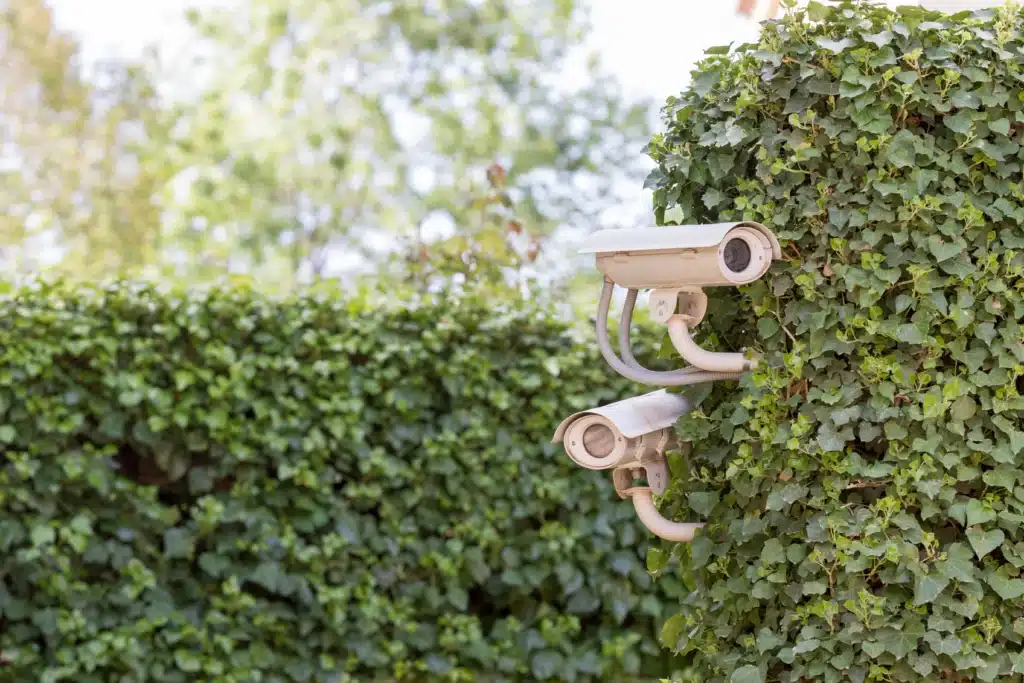
Adding cameras that cover your pond area means you can keep an eye on it when you aren’t nearby. If you have older children or pets that roam outside without much supervision, a camera can give you peace of mind. There are many different options for outdoor cameras including motion activated trail cameras.
Alarms can also alert you if someone is near or in your pond. Some alarms can be placed around the perimeter of the pond and can trigger an alert, a camera, or can release a high pitched noise to deter children and animals. Some alarms can float on the water’s surface and alert you when something enters the water. However, they may not suit ponds with fish or other wildlife.
Water safety skills
Even if you have every pond safety precaution in place, accidents can still happen. Knowing what to do in these situations can make the difference between a funny anecdote and a horrible memory, so take the time to educate yourself and others on water safety skills.
Children can be especially vulnerable to accidents, so it’s important to make sure that they know what to do in an emergency.
- Check if children can swim
- Have an emergency plan in place
- Make sure first aid kits, phones, or floatation devices are accessible
- Supervise children or vulnerable people near water
- Learn basic first aid skills including CPR and the kiss of life
- Seek medical advice if an accident occurs, especially a drowning event (even if the person seems fine)
There are many different ways that ponds can be kept safe. Safety should be a key consideration for anyone who currently owns or is considering creating a pond in their outdoor space.
By keeping your specific requirements in mind and combining different pond safety measures, you can create a safe environment for you, your family, and any visitors (human or animal).