A Guide To Indoor Glass Balustrades
Glass Balustrades For Today, Tomorrow and Forever
Why choose an internal glass balustrade system?
Internal glass balustrades are an elegant way of incorporating modern design inside of your property. Glass designs allow for more light to flow through the area and, with nothing to block your line of sight, glass balustrades will give you the feeling of being in a much larger space.
The same rules do not always apply to listed buildings or properties in conservation areas.

Design
Being able to choose a balustrading system that fits with your home’s style is easy with so many different designs to choose from. Minimalist designs and frameless options can make your space flow from one area to the next. Frosted or tinted glass options allow for more privacy while still allowing light to pass through.
Practical safety
Toughened or laminated glass panels are stronger and safer than regular glass. This strength means they can be used for balustrades in areas where there are stringent safety standards. With a wide range of thicknesses, glass balustrades can be installed in a variety of high traffic and high elevation areas of your home.
Low maintenance
Glass, aluminium, and stainless steel are all durable materials that can withstand corrosion and hold up well against wear and tear. The right glass maintenance routine will ensure your balustrade stays in good condition for years to come. This can be as simple as cleaning balustrade glass with warm soapy water every few months, making glass balustrades a low maintenance feature in your property.
If the change to glass balustrades causes privacy concerns then you may need to consider reapplying for planning permission. Planners can refuse changes that allow direct views into private gardens or windows.
Sustainability
High-quality toughened and laminated safety glass is extremely durable. Choosing a glass balustrade system will reduce the long-term waste of building construction and renovations, as it won’t need to be replaced frequently. Boosting the internal light in a property by adding glass can also help to cut down energy bills by making you less reliant on electrical lighting.
Where to use internal glass balustrades
Stairs
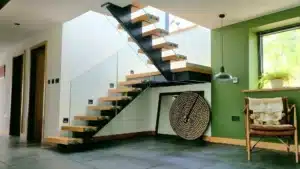
Adding a glass balustrade system around your staircase can open up what could traditionally be a darker space. Letting light filter across different levels in your home is an excellent way to make an area seem larger and more open.
Staircases with glass balustrades can even be safer than their traditional counterparts. Gaps in stairs can be a hazard for pets, children, or falling objects. However, the openings in glass balustrades are thin enough that they can be fixed flush with the actual stairs.

Mezzanine
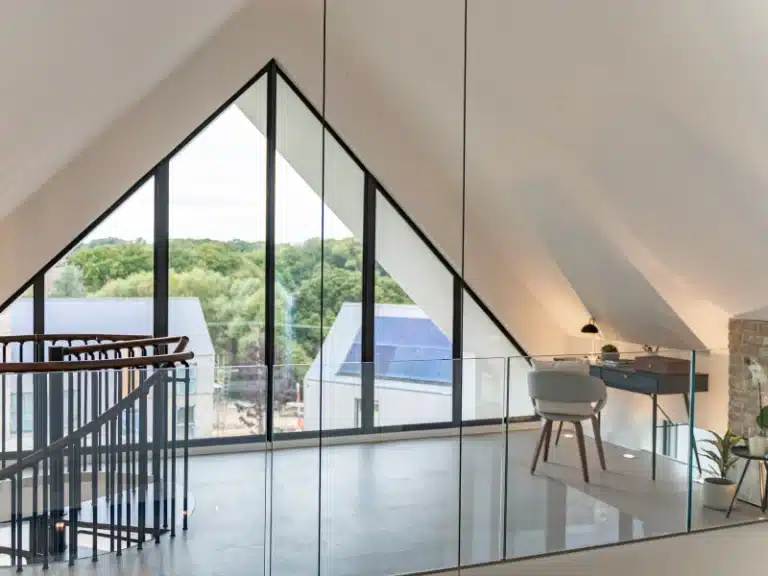
Adding a mezzanine to a space can increase the living area in a home by making use of vertical space. Using a glass balustrade system can help to connect the upper and lower levels by allowing light to pass through the glass.
Partitions
Breaking up large areas with partitions can be an excellent way of creating zones in your space, making it easier to plan out living and working areas. Glass balustrades allow the space to feel open and airy, while still adding in zoning areas. Frosted or tinted glass can be used to create a more private space while not making it feel cut off from other areas.
Landings
Having a glass balustrade system across a landing area can open up what can be a small, enclosed space. By replacing traditional wood with glass the light from upstairs can filter down, and vice versa.
Indoor swimming pools & hot tubs
Having a barrier around a swimming pool or hot tub can add another layer of safety to the space. This can be especially important if there are children or pets around those spaces. Glass balustrade systems for swimming pools can add this extra layer of safety.
Glass panels allow you to see through to the water and check on occupants more easily than opaque options. Glass is also durable and easy to clean with basic glass-cleaning supplies.

Commercial indoor glass balustrades
Internal glass balustrade systems can also be used to great effect in commercial spaces such as bars, restaurants, offices, or hotels. The safety regulations for glass balustrades in commercial areas are slightly different to those in residential spaces. This is to support higher foot traffic or load requirements, and thicker glass may be required.

Offices
Glass balustrades partition offices and create zones for different departments or breakout spaces. Frosted or tinted glass can be used to create more private areas that still feel connected to the overall space.
Powder-coating can be used on metalwork to include brand colours, while building regulations state that there need to be marking manifestations on large, transparent glass sections. This can include sections of frosted glass, vinyl sticker designs, or an etched company logo.
For offices in older buildings, encapsulating original features such as decorative iron railings with glass balustrade systems can keep the traditional building’s style while adding a layer of safety.
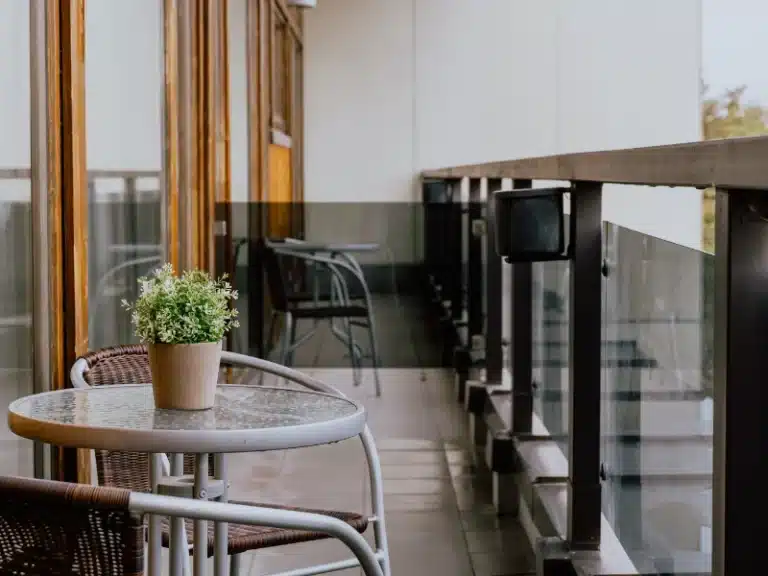
Hospitality
Adding glass balustrades into hospitality settings can bring another layer of design and safety to a space. Balustrades can be used to divide large spaces, creating smaller and more intimate areas. They can also help to reduce sound disturbance, which is ideal for staff spaces or large restaurants.
Internal glass balustrades can create a seamless focal point for customers, while minimising any obstructing views. Letting light filter through the space will allow for more customisable lighting design options, with focus on creating a bright and open space.
Do I need planning permission for internal glass balustrades?
Internal changes to your home are generally classed as permitted development, so you don’t need to apply for planning permission. However, you do need to comply with building regulations, no matter where your glass balustrades are installed.
Planning permission and permitted development rights vary depending on the local authority and property type, so it’s always worth checking before you start a new project. If you are making changes to a building that is listed or in a conservation area, you may need to get planning permission.
Safety & building regulations
The UK building regulations are the minimum standards for safety, energy efficiency and accessibility. They apply to all major construction or renovation projects, whether you need planning permission or not. If your glass balustrade project is not compliant with these standards then you could be fined or have to undo the work.
Internal glass balustrade safety regulations
Balustrades are mandatory where there is a level change of 600mm in residential spaces or 380mm in commercial properties. The minimum balustrade height for internal staircases is at least 900mm. This increases to at least 1100mm for interior landings.
Any openings must not be able to let a 100mm sphere pass through. This is to stop children or animals from getting stuck or falling through gaps in the balustrades. Suppliers will be aware of the required building regulations and can help you with selecting the best balustrade option.
The main standards to meet are outlined in:
- Approved Document K: Protection from falling, collision and impact
- BS 6180:2011: Barriers in and about buildings

Adding internal glass balustrades to your home or office space can significantly change the aesthetics of a space, increase natural lighting, and add another layer of safety to high-traffic areas. Taking the time to plan out how to incorporate an indoor glass balustrade can make the process easier, while checking planning permission and building regulation requirements ensures that your project remains safe for years to come.